
Do Professional Roulette Players Exist?
By Daniel Grant
Updated 14 Jul, 2026

Is there really such a thing as a professional roulette player? What does it mean when someone makes news for a big win? In order to tackle each of these questions honestly we first need to make it clear that roulette is a game of pure chance. Outcomes are down to luck – nothing more. That means you cannot make a living playing roulette.
That said, there are several figures in the history of roulette that are famous for playing the game, whether that’s because of their personalities, or their extraordinary luck at the table.
Meet the luckiest men & women in roulette
Joseph Jagger
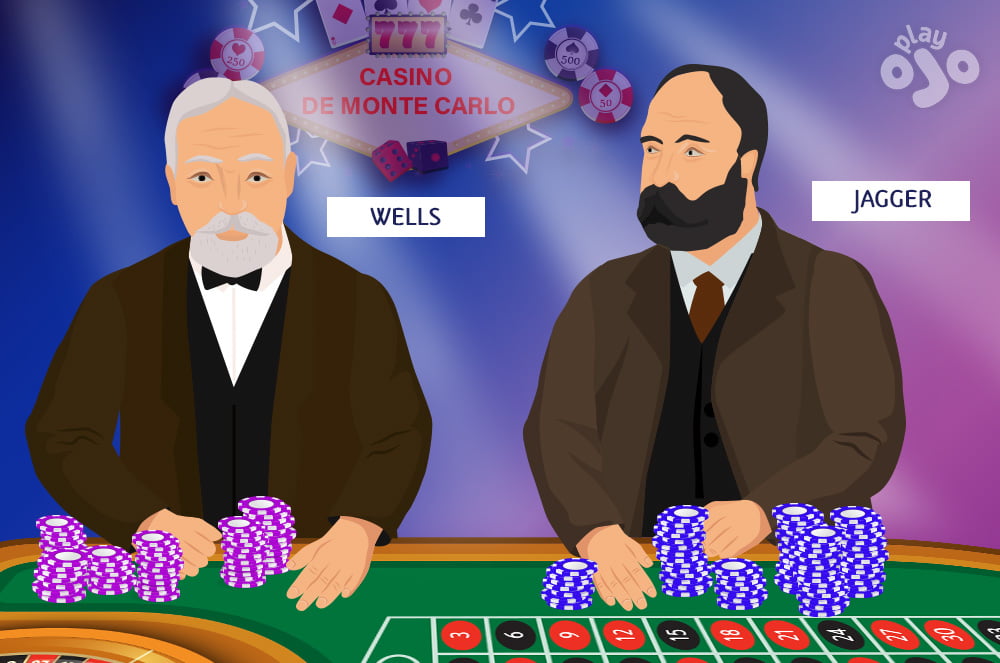
Born in 1830, Jagger was a UK textiles magnate who took on the casinos of Monte Carlo, reportedly exploiting physical flaws in roulette wheels for years. Today, physical wheels in casinos and live roulette studios are manufactured to the highest standards and tested extensively to ensure they are completely random. The same goes for RNG roulette, run by heavily audited computer software.
Yet 200 years ago, these fairness mechanisms weren’t present, and Jagger may have been able to find opportunities that shouldn’t have existed. He apparently spent his winnings on real estate before dying of diabetes at the age of 62. His colourful life was chronicled in a biography by great-niece Anne Fletcher.
Charles Wells
Another man who allegedly broke the bank at Monte Carlo in the 19th century, Wells started his career as an engineer and made his first fortune selling the patent for an invention.
He went to Monte Carlo around the same time as Jagger and he claims to have relieved the casinos of outrageous sums, although no one knows how he did it. It may have been extraordinary luck, or exploiting flaws like Jagger. Wells lost his money back and was later arrested for fraudulent schemes, serving 8 years in the prison.
Gonzalo Garcia-Pelayo
This famous Spanish roulette player has had a varied career in music, broadcasting and gambling. Known as the father of Andalusian rock, Garcia-Pelayo has also been involved in 13 movies as recently as 2016.
To Gonzalo, roulette was a family affair, and it’s claimed that by spotting suspected wheel biases, the Garcia-Pelayos won over 250 million pesetas in casinos across the world. If true, it’s an extremely rare story, and they’d find it impossible on today’s modern roulette tables, which are made to high standards of randomness and monitored closely.
Richard & Carol Jarecki
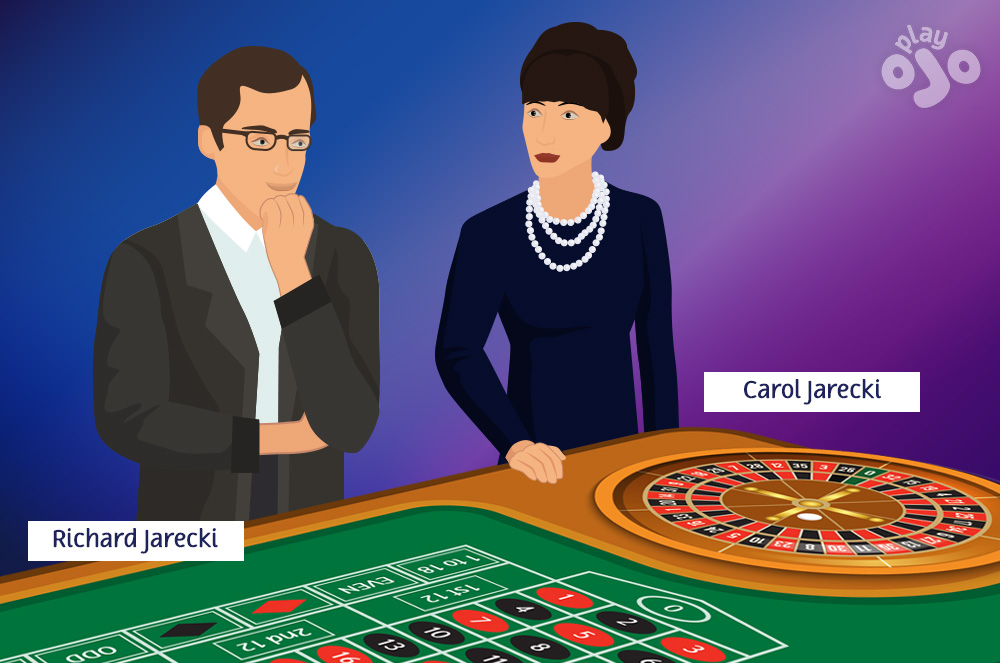
The late 20th century was seen a golden era by some professional roulette players and there’s no shortage of tales of fortunes won and lost. But none are more interesting than the Jareckis, a husband-and-wife team who allegedly won over £8 million in today’s money, on this game of pure chance.
Once called “a menace to every casino in Europe”, Richard was a German doctor who applied his scientific mind to the issue of wheel biases. Helped by his wife Carol, the pair tracked wheels all over the world, although they focused on France, Britain and Germany. When wheels became more reliable and random, the pair gave up their professional roulette play and turned to financial trading
Edward O. Thorp
Other players on our list of roulette pros have put in hundreds of hours of hard work looking for biased wheels to exploit. Thorp was more interested in beating every wheel using just the simple laws of physics.
Thorp was an American math professor who became famous with the publication of Beat The Dealer, a book which changed the course of blackjack.
Thorp and his sidekicks were also the pioneers of roulette wheel clocking, and paved the way for other teams of academics such as the Eudaemons. You could say he’s responsible for the many mobile apps which claim to help you beat the wheel using the same mechanics behind clocking.
What is a professional roulette player?
A roulette pro’s goal is to make a consistent profit from a game of pure chance – not a realistic prospect in fair, regulated modern roulette. They still take risks of course, but though they may try to manage risk, returns are never guaranteed and roulette outcomes are determined by chance.
But as roulette is pure luck, so how they do they do it? To become a roulette pro, you would have to predict the next number more often than random chance – which we already know is impossible today. In the past, there were only 2 approaches used by the famous professional roulette players above.
The Clockers: Using physics against the house
Since the 1960s, people have been using simple, portable computers and the laws of physics to try and beat the wheel. By inputting variables such as wheel speed, ball speed, deceleration and ball bounce, some believe you can predict approximately where the ball will land There is no evidence this theory works, and clocking is usually prohibited in casinos and will likely get you banned.
The Trackers: Finding biased wheels
The history of roulette is littered with stories of wheel biases being exploited. A wheel bias is a situation where a defect prevents a wheel from being fully random, and therefore certain numbers appear more often than they should.
In the early years, manufacturing processes where not as precise, and casinos failed to track game outcomes as diligently as they do now. After a certain amount of use, a wheel may develop a bias and over thousands of subsequent spins, the favoured numbers could be spotted by players.
As I said earlier, roulette wheels should be random for everyone, on every spin, and online roulette has ushered in huge advances in fairness and security to ensure that games are fair and players are safe.
What else do you need to take a more professional approach to playing roulette?
Can you make a living playing roulette? No. But if you enjoy this form of entertainment and are interested in learning more, then these characteristics will come in handy.
Patience
So-called professional roulette players from the past spent a huge amount of time finding suitable tables and analysing results before they put their own money down. They may have only gained a very small edge from biased wheels, too, so it took time to reap the rewards.
Zen calm
Roulette will always be a game of chance, and there will be ups and downs. If you can’t take a streak of losses or step back and see the bigger picture, it’s time to give up.
Important reasons NOT to try becoming a professional roulette player
The best professional roulette player tips I can give you are to not bother, and to play for the enjoyment, not the hope of winning money. Here’s why…
Opportunities are gone
The opportunities to exploit physical roulette wheels no longer exist, and you won’t find a casino that allows clocking.
Long hours
The professional roulette players mentioned above played for long, unsociable hours. First comes a lot of research and possibly learning some technical expertise, then hours and hours of practice. Playing roulette or any gambling game for significant lengths of time is simply not a safe way to play
It’s boring
The play phase itself is likely to be the most boring element in trying to win at roulette. Forget any notion of Vegas, tuxedos, martinis and Lamborghinis. You’ll dress to be ignored, place many small bets and watch endless wheel spins. If you are very lucky, you might win, but this process turns a game of entertainment into something tedious.
Uneven results
The tactics mentioned above, and in fact any roulette systems, will never produce an instant, significant or even steady profit, and they all come with risks attached. Whatever you do, the outcome of any roulette wheel is 100% down to luck.
The bottom line
Becoming a roulette professional player is not a way to earn a living.
The smart play is simply to find a good roulette guide, make sure you know how to play roulette, make sure you get the best odds and bet for fun.

Daniel Grant
About the Author
Dan Grant is a 25-year veteran of the gaming industry and a leading authority on iGaming content with over 1,000 articles on topics such as industry trends and bankroll strategy. He began in sports betting in 1997, then spent 11 years at a leading poker brand. As a content lead for iGaming marketing agencies, Dan has worked with over 30 regulated gaming brands, including giants like IGT. He also has a Law degree, providing a unique perspective on the regulatory complexities of the gaming market.
Related Posts
Availability depends on your country





'%3e%3cg%20id='Group'%3e%3cg%20id='Group_2'%3e%3cg%20id='Group_3'%3e%3cpath%20id='Vector'%20d='M24.127%203.03223H35.6789V5.65009H27.1313V9.47147H32.8239V12.0893H27.1313V16.3587H35.9425V18.9766H24.127V3.03223Z'%20fill='%2323208F'/%3e%3cpath%20id='Vector_2'%20d='M35.6797%207.64429H38.7544L41.4425%2015.5418L43.9374%207.64429H46.9154L42.7866%2018.9766H40.0282L35.6797%207.64429Z'%20fill='%2323208F'/%3e%3cpath%20id='Vector_3'%20d='M47.0117%2013.3368C47.0117%209.87564%2049.41%207.43347%2052.8448%207.43347C56.2533%207.43347%2058.6603%209.88442%2058.6603%2013.3368C58.6603%2016.7453%2056.2094%2019.1963%2052.7745%2019.1963C49.366%2019.1963%2047.0117%2016.7893%2047.0117%2013.3368ZM55.6384%2013.4071V13.3105C55.6384%2011.1494%2054.5842%209.84928%2052.8536%209.84928C51.0966%209.84928%2050.0425%2011.1494%2050.0425%2013.3105V13.4071C50.0425%2015.5242%2051.0703%2016.7717%2052.8009%2016.7717C54.5578%2016.7717%2055.6384%2015.5155%2055.6384%2013.4071Z'%20fill='%2323208F'/%3e%3cpath%20id='Vector_4'%20d='M60.584%202.81262H63.5884V18.9766H60.584V2.81262Z'%20fill='%2323208F'/%3e%3cpath%20id='Vector_5'%20d='M65.8633%2014.4349V7.64429H68.8413V14.268C68.8413%2015.779%2069.5617%2016.6662%2070.9057%2016.6662C72.4694%2016.6662%2073.1195%2015.3485%2073.1195%2013.3983V7.64429H76.0975V18.9766H73.1195V17.369C72.5221%2018.5462%2071.4855%2019.1963%2070.0185%2019.1963C67.4533%2019.1963%2065.8633%2017.369%2065.8633%2014.4349Z'%20fill='%2323208F'/%3e%3cpath%20id='Vector_6'%20d='M79.383%2015.9722V10.0425H77.7754V7.64427H79.383V5.50079L82.2908%203.86682V7.63549H84.5221V10.0337H82.2644V15.6736C82.2644%2016.227%2082.528%2016.4642%2083.0814%2016.4905H84.3991V18.9678H82.0975C79.9101%2018.8536%2079.4357%2017.8522%2079.383%2015.9722Z'%20fill='%2323208F'/%3e%3cpath%20id='Vector_7'%20d='M86.4453%203.07617H89.5463V5.98393H86.4453V3.07617ZM86.4892%207.64425H89.4936V18.9766H86.4892V7.64425Z'%20fill='%2323208F'/%3e%3cpath%20id='Vector_8'%20d='M91.418%2013.3368C91.418%209.87564%2093.8162%207.43347%2097.2511%207.43347C100.66%207.43347%20103.067%209.88442%20103.067%2013.3368C103.067%2016.7453%20100.616%2019.1963%2097.1808%2019.1963C93.7723%2019.1963%2091.418%2016.7893%2091.418%2013.3368ZM100.036%2013.4071V13.3105C100.036%2011.1494%2098.9817%209.84928%2097.2511%209.84928C95.4941%209.84928%2094.4399%2011.1494%2094.4399%2013.3105V13.4071C94.4399%2015.5242%2095.4677%2016.7717%2097.1983%2016.7717C98.9553%2016.7717%20100.036%2015.5155%20100.036%2013.4071Z'%20fill='%2323208F'/%3e%3cpath%20id='Vector_9'%20d='M104.964%207.64429H107.942V9.48909C108.539%208.17138%20109.646%207.39832%20111.254%207.39832C113.731%207.39832%20115.189%209.05864%20115.189%2012.1772V18.9766H112.211V12.3529C112.211%2010.7717%20111.614%209.95468%20110.217%209.95468C108.803%209.95468%20107.933%2011.1055%20107.933%2013.2226V18.9854H104.955L104.964%207.64429Z'%20fill='%2323208F'/%3e%3c/g%3e%3c/g%3e%3cg%20id='Group_4'%3e%3cg%20id='Group_5'%3e%3cg%20id='Group_6'%3e%3cpath%20id='Vector_10'%20d='M17.1173%204.49933C14.4028%200.923925%209.47456%20-0.0863242%205.38086%202.10108C6.97969%205.69406%208.17442%209.91953%2016.0544%2010.1655C16.9768%2010.1919%2017.9958%2010.1655%2019.1115%2010.0777C18.9533%207.81997%2018.2154%205.94881%2017.1173%204.49933Z'%20fill='%2323208F'/%3e%3cpath%20id='Vector_11'%20d='M15.6678%2011.8522C10.9241%2012.0894%208.7015%2013.8112%207.31351%2015.9459C6.49653%2017.2021%205.96944%2018.5901%205.38086%2019.8991C11.1261%2022.9649%2018.5492%2019.7321%2019.1115%2011.9137C17.8377%2011.8171%2016.6869%2011.7995%2015.6678%2011.8522Z'%20fill='%2323208F'/%3e%3c/g%3e%3c/g%3e%3c/g%3e%3c/g%3e%3c/g%3e%3cdefs%3e%3cclipPath%20id='clip0_10172_12682'%3e%3crect%20width='120'%20height='21.9619'%20fill='white'%20transform='translate(0.285156%200.019043)'/%3e%3c/clipPath%3e%3c/defs%3e%3c/svg%3e)




'%3e%3cpath%20id='Vector'%20d='M35.8604%200H35.168V24H35.8604V19.3822H44.6063V16.5862H37.877V13.3664H43.6296V10.5494H37.877V7.43484H44.6063V4.61782H35.8604V0Z'%20fill='%2323208F'/%3e%3cpath%20id='Vector_2'%20d='M8.63805%2013.6718L6.15275%209.64895L2.96715%204.66782L2.93555%204.6178H0.294922V19.3822H3.22515V10.3071L5.41032%2013.8429L8.92502%2019.3822H11.5867V4.6178H8.63805V13.6718Z'%20fill='%2323208F'/%3e%3cpath%20id='Vector_3'%20d='M13.2344%2019.3822H22.9123V16.5862H16.183V13.3664H21.9356V10.5493H16.183V7.43482H22.9123V4.6178H13.2344V19.3822Z'%20fill='%2323208F'/%3e%3cpath%20id='Vector_4'%20d='M24.0996%207.45588H27.4827V19.3822H30.4313V7.45588H33.7933V4.6178H24.0996V7.45588Z'%20fill='%2323208F'/%3e%3cpath%20id='Vector_5'%20d='M54.4252%2013.6954L51.9399%209.67527L48.7543%204.69413L48.7227%204.64148H46.082V19.4058H49.0096V10.3308L51.1948%2013.8666L54.7121%2019.4058H57.3738V4.64148H54.4252V13.6954Z'%20fill='%2323208F'/%3e%3cpath%20id='Vector_6'%20d='M58.5781%204.64148V7.47957H61.9612V19.4058H64.9098V7.47957H68.2719V4.64148H58.5781Z'%20fill='%2323208F'/%3e%3c/g%3e%3cdefs%3e%3cclipPath%20id='clip0_10172_12744'%3e%3crect%20width='67.9798'%20height='24'%20fill='white'%20transform='translate(0.294922)'/%3e%3c/clipPath%3e%3c/defs%3e%3c/svg%3e)









We use both automated and manual processes in order to verify the age of the customer registering the account and any player under the age of 18 who registers an account will have their account closed immediately.
We say NO to Underage Gambling . We do not allow players under the age of 18 to gamble. This is stated in our Terms and Conditions.


'/%3e%3c/g%3e%3cdefs%3e%3clinearGradient%20id='paint0_linear_10172_24211'%20x1='7'%20y1='2'%20x2='23.4625'%20y2='10.6428'%20gradientUnits='userSpaceOnUse'%3e%3cstop%20stop-color='%234921C5'/%3e%3cstop%20offset='1'%20stop-color='%23A608FF'/%3e%3c/linearGradient%3e%3c/defs%3e%3c/svg%3e)
'/%3e%3c/g%3e%3cdefs%3e%3clinearGradient%20id='paint0_linear_10172_24214'%20x1='1.21484'%20y1='2.25'%20x2='20.6158'%20y2='23.7133'%20gradientUnits='userSpaceOnUse'%3e%3cstop%20stop-color='%234921C5'/%3e%3cstop%20offset='1'%20stop-color='%23A608FF'/%3e%3c/linearGradient%3e%3c/defs%3e%3c/svg%3e)
'/%3e%3c/g%3e%3cdefs%3e%3clinearGradient%20id='paint0_linear_10172_24217'%20x1='2.00195'%20y1='2'%20x2='22.002'%20y2='22'%20gradientUnits='userSpaceOnUse'%3e%3cstop%20stop-color='%234921C5'/%3e%3cstop%20offset='1'%20stop-color='%23A608FF'/%3e%3c/linearGradient%3e%3c/defs%3e%3c/svg%3e)
'/%3e%3c/g%3e%3cdefs%3e%3clinearGradient%20id='paint0_linear_10172_24220'%20x1='2'%20y1='4'%20x2='17.6088'%20y2='23.5113'%20gradientUnits='userSpaceOnUse'%3e%3cstop%20stop-color='%234921C5'/%3e%3cstop%20offset='1'%20stop-color='%23A608FF'/%3e%3c/linearGradient%3e%3c/defs%3e%3c/svg%3e)
Trademark ™ 2026 PlayOJO. All rights reserved.
Apple and the Apple logo are trademarks of Apple Inc., registered in the U.S. and other countries. App Store is a service mark of Apple Inc., registered in the U.S. and other countries.