
La Partage & En Prison in French Roulette: How These Rules Cut the House Edge in Half
By Daniel Grant
Updated Jul 24, 2026
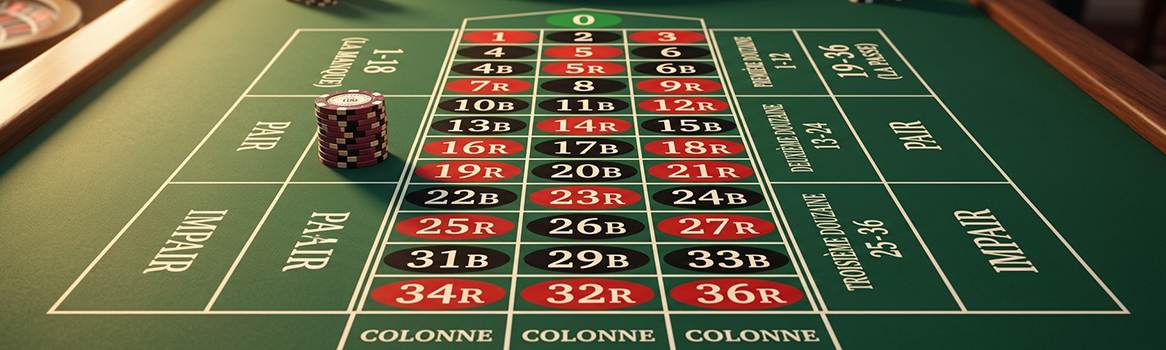
Not all roulette games are created equal. Most players end up sitting down to a 5.26% or 2.70% house edge without realising that there's a better version available. And I'm not just talking about European versus American roulette.
Let me break down the logic behind the commonly misunderstood La Partage and En Prison rules of French roulette. In just a few minutes, you'll be able to pin-point and play the game at its lowest possible house edge of just 1.35% .
Background: Not All Roulette Games Have the Same RTP
Most people are aware that there are three main roulette variants: American, European, and French. What you might not know is that each variant has a different house edge. For the most part, it all comes down to the zero. Those green pockets are there to make even money bets (ie. red/black, even/odd, high/low) less of a 50/50 coin toss. Let's take a closer look:
Variant | Zeros | Even Bet House Edge | RTP |
American | 0, 00 | 5.26% | 94.74% |
European | 0 | 2.70% | 97.30% |
French (La Partage/En Prison) | 0 | 1.35% | 98.65% |
American Roulette
The first choice for our patriotic friends across the pond, American Roulette is actually the most modern version of the game. It has not one, but two zeroes: 0 and 00. This was a deliberate move to actually increase the house edge of the game when it first arrived at state-side casinos. Those two green pockets blow the house edge to its maximum of 5.26%, giving a 94.74% RTP. It is statistically the worst value version of the game you can play.
European Roulette
Only once removed from the traditional game, European Roulette is a somewhat simplified version of the original. It has a single zero, which is where the house edge comes from. That single green pocket leads to a house edge of 2.70% and an overall RTP of 97.30%. A vast improvement on the American variant, but can we do better?
French Roulette
As close to the original game without going back in time, French Roulette is the authentic experience, complete with a single zero. This one, however, has a house edge as low as 1.35%. So what makes the difference here? La Partage and En Prison rules. These rules define what happens to your even money bet if the ball lands on zero. That might seem insignificant, but a maximum possible RTP of 98.65% is nothing to be sniffed at.
What Is La Partage in Roulette?
La Partage is a special roulette rule that applies to your even money bet if the ball lands on zero. Translating to 'the divide' in French, it means that your stake is split between you and the casino. Half is returned to you and the other half is a loss.
As an example, imagine you place a £100 bet on red and the ball lands on zero. The La Partage rules means you get £50 back, and the casino keeps the other £50.
What Is En Prison in Roulette?
En Prison is a slightly different rule that applies to even money bets when zero lands, though En Prison Roulette online games are a bit harder to find. As you might've guessed, 'en prison' means 'in prison' and it effectively locks your stake in place. If the next wheel spin results in a win, you get your stake back (no profit). Otherwise, your stake is lost.
This rule variation feels totally different from La Partage because your stake is held in limbo for the next spin. It's not lost, but you can't touch it. You just have to wait for the next result.
La Partage vs En Prison – Which Is Better?
Whether La Partage or En Prison is better really boils down to what kind of game you're looking for. La Partage is a fuss-free instant decision, while En Prison involves an intense wait - a bit like the squeeze in Baccarat. Maths-wise, however, they are identical, with a 1.35% house edge for both.
Here are the main differences between La Partage and En Prison:
Feature | La Partage | En Prison |
Zero outcome | Half stake returned | Stake held |
Risk | Lower volatility | Higher volatility |
Resolution | Immediate | Delayed |
House edge | 1.35% | 1.35% |
Comparison with EU Roulette: Why This Rule Cuts the House Edge in Half
Both La Partage and En Prison cut the standard 2.70% house edge of European Roulette in half. Even if you hate maths as much as I do, the numbers behind this are pretty straightforward.
In European Roulette, a zero result turns an even money bet into a 100% loss. There's a 1 in 37 chance of that happening, giving you a 2.70% house edge (1/37 = 0.027).
But since French Roulette's La Partage rule means you only lose half your bet, that halves the house edge: 2.70 / 2 = 1.35%.
The En Prison rule's maths is slightly more complicated. Because the chance of hitting a zero again is incredibly small, your En Prison stake has an almost 50/50 chance of winning. As in La Partage, that splits the standard 2.70% house edge to 1.35%.
Interestingly, a few casinos rule that a second zero results in your even money bet losing (ie. no second En Prison). Even in such a case, the house edge only drops to 1.39%. That's still way better than 2.70%.
Long-Term Bankroll Impact (100, 1,000, 10,000 Spins)
So how much of an impact can that tiny percentage have in the long term? As it turns out, quite a significant one:
Spins | European loss | La Partage loss | Difference |
100 | £27 | £13.50 | £13.50 |
1,000 | £270 | £135 | £135 |
10,000 | £2,700 | £1,350 | £1,350 |
A typical session of 100 spins of French Roulette might save you £13.50 versus a £27 loss at European Roulette. Not bad, that's maybe a coffee and a sandwich. Now, expand that to a longer time scale and the numbers start to become really significant. Compare the £270 loss to a £135 saving across 1,000 spins. When you get to 10,000 spins, that’s a very significant £1,350.
If you only play your lucky numbers now and then, these house edge differences don't really matter much. However, if you're a regular real-money player, they can really add up. .
Does La Partage Apply to All Bets?
The La Partage rule does not apply to all bets: only even money bets. If you only ever bet straight up (ie. on a single number), the house edge is exactly the same as for European Roulette.
Here's a quick reminder of the bets that do and don't qualify under the La Partage rule:
✅ Red/Black✅ Odd/Even✅ 1-18 / 19-36 (aka Low/High)❌ Straight up❌ Split❌ Corner❌ Dozens
How to Find French La Partage Roulette Online

If you want to play French La Partage roulette online, you can find the best RTP version by first looking for French Roulette, then confirming that it runs La Partage or En Prison rules. At PlayOJO, you can find this information in the game's How To Play pages.
Here's a step by step guide to what to look for:
Look for French Roulette in the games lobby
Find the game info, usually by clicking the ? icon
Check for La Partage or En Prison (most likely under Payouts)
Confirm it applies to even money bets on zero
Sometimes you don't even have to go that far. Games like Auto Roulette La Partage make it obvious from just the name. That's perfect when you just want to jump right into auto roulette La Partage real money games without the faff.
House Edge French Roulette La Partage En Prison – Summary
The French Roulette La Partage En Prison house edge is a rock bottom 1.35%, half the 2.70% of European Roulette. However, remember that only applies to even money bets when the ball lands on zero. You're still looking at a 2.70% house edge on inside bets.
It's certainly a nice cut, making French Roulette the mathematically superior choice if you play outside bets. Bear in mind, though, that this is no winning strategy. The edge is still in the house's favour, and no strategic approach is going to overcome that fact.
Common Myths About La Partage
Many players misunderstand or confuse La Partage and En Prison rules, incorrectly assuming they increase your chances of winning. Let's bust a few of these myths:
❌ It increases win probability: Nope, a lower house edge does not affect your chances of winning. It's simply the cut of played funds the casino keeps.❌ It removes house edge: No, there's always a house edge or the game wouldn't be profitable for the casino. It's simply a lower house edge in this case (but only for outside bets).❌ It guarantees profit: Not true. There are no guarantees when it comes to gambling. Every outcome is random and independent of the last, regardless of the house edge.✅ It reduces expected loss on specific bets: Correct. On outside bets, instead of the 100% loss of European Roulette, you only lose half with La Partage, or a 50/50 delayed stake back with En Prison.
Is French Roulette the Best Version to Play?
If you like playing outside bets, then yes, French Roulette's 1.35% house edge is mathematically better than the 2.70% of European Roulette. However, if you play inside bets, French Roulette offers no distinct advantage over the European version. La Partage and En Prison rules only apply to even money bets: red/black, even/odd, high/low.
While these rules do result in a better value version of the game, remember that the house still has the advantage. Their edge might be lower, but it's still there and no strategy is going to change that. Next time you're at the roulette wheel, try the La Partage version and see what happens to your even money bets when zero lands.
FAQs
What is La Partage in roulette?
La Partage is a French Roulette rule that determines what happens to even money bets like red/black if the ball lands on zero. La Partage translates to 'the divide' and means that half of the stake on an even money bet is returned to the player.
What is En Prison?
En Prison is a rule in French Roulette that determines what happens to even money bets when the result is zero. En Prison translates to 'in prison' and means that the even money stake remains in place for the next round. It's not a loss, but it isn't returned to the player either. If it results in a win in the next round, only the stake is returned.
Is French roulette better than European?
Mathematically, French Roulette is better than European Roulette, but only if you play outside bets. French Roulette's La Partage and En Prison rule variants result in a house edge of 1.35%. This is half the house edge of European Roulette (2.70%). However, if you only play inside bets, the house edge is 2.70% for both French and European variants.
What is the house edge with La Partage?
The French Roulette La Partage house edge is 1.35%. In European Roulette, all even money bets lose if a zero lands. Since you get half your stake back with La Partage, the house edge is halved from 2.70% down to 1.35%.
Does La Partage apply to all bets?
No, the La Partage rule only applies to even money bets, aka outside bets. That means red/black, even/odd, or high/low bets only. The La Partage rule does not apply to straight up, split, corner, dozen, or street bets.
Can I play French La Partage roulette online?
Yes, the French Roulette La Partage variant is available to play online. To find it, you can either search for La Partage, or look for La Partage in the game info menu of French Roulette games.

Daniel Grant
About the Author
Dan Grant is a 25-year veteran of the gaming industry and a leading authority on iGaming content with over 1,000 articles on topics such as industry trends and bankroll strategy. He began in sports betting in 1997, then spent 11 years at a leading poker brand. As a content lead for iGaming marketing agencies, Dan has worked with over 30 regulated gaming brands, including giants like IGT. He also has a Law degree, providing a unique perspective on the regulatory complexities of the gaming market.
Related Posts
Availability depends on your country





'%3e%3cg%20id='Group'%3e%3cg%20id='Group_2'%3e%3cg%20id='Group_3'%3e%3cpath%20id='Vector'%20d='M24.127%203.03223H35.6789V5.65009H27.1313V9.47147H32.8239V12.0893H27.1313V16.3587H35.9425V18.9766H24.127V3.03223Z'%20fill='%2323208F'/%3e%3cpath%20id='Vector_2'%20d='M35.6797%207.64429H38.7544L41.4425%2015.5418L43.9374%207.64429H46.9154L42.7866%2018.9766H40.0282L35.6797%207.64429Z'%20fill='%2323208F'/%3e%3cpath%20id='Vector_3'%20d='M47.0117%2013.3368C47.0117%209.87564%2049.41%207.43347%2052.8448%207.43347C56.2533%207.43347%2058.6603%209.88442%2058.6603%2013.3368C58.6603%2016.7453%2056.2094%2019.1963%2052.7745%2019.1963C49.366%2019.1963%2047.0117%2016.7893%2047.0117%2013.3368ZM55.6384%2013.4071V13.3105C55.6384%2011.1494%2054.5842%209.84928%2052.8536%209.84928C51.0966%209.84928%2050.0425%2011.1494%2050.0425%2013.3105V13.4071C50.0425%2015.5242%2051.0703%2016.7717%2052.8009%2016.7717C54.5578%2016.7717%2055.6384%2015.5155%2055.6384%2013.4071Z'%20fill='%2323208F'/%3e%3cpath%20id='Vector_4'%20d='M60.584%202.81262H63.5884V18.9766H60.584V2.81262Z'%20fill='%2323208F'/%3e%3cpath%20id='Vector_5'%20d='M65.8633%2014.4349V7.64429H68.8413V14.268C68.8413%2015.779%2069.5617%2016.6662%2070.9057%2016.6662C72.4694%2016.6662%2073.1195%2015.3485%2073.1195%2013.3983V7.64429H76.0975V18.9766H73.1195V17.369C72.5221%2018.5462%2071.4855%2019.1963%2070.0185%2019.1963C67.4533%2019.1963%2065.8633%2017.369%2065.8633%2014.4349Z'%20fill='%2323208F'/%3e%3cpath%20id='Vector_6'%20d='M79.383%2015.9722V10.0425H77.7754V7.64427H79.383V5.50079L82.2908%203.86682V7.63549H84.5221V10.0337H82.2644V15.6736C82.2644%2016.227%2082.528%2016.4642%2083.0814%2016.4905H84.3991V18.9678H82.0975C79.9101%2018.8536%2079.4357%2017.8522%2079.383%2015.9722Z'%20fill='%2323208F'/%3e%3cpath%20id='Vector_7'%20d='M86.4453%203.07617H89.5463V5.98393H86.4453V3.07617ZM86.4892%207.64425H89.4936V18.9766H86.4892V7.64425Z'%20fill='%2323208F'/%3e%3cpath%20id='Vector_8'%20d='M91.418%2013.3368C91.418%209.87564%2093.8162%207.43347%2097.2511%207.43347C100.66%207.43347%20103.067%209.88442%20103.067%2013.3368C103.067%2016.7453%20100.616%2019.1963%2097.1808%2019.1963C93.7723%2019.1963%2091.418%2016.7893%2091.418%2013.3368ZM100.036%2013.4071V13.3105C100.036%2011.1494%2098.9817%209.84928%2097.2511%209.84928C95.4941%209.84928%2094.4399%2011.1494%2094.4399%2013.3105V13.4071C94.4399%2015.5242%2095.4677%2016.7717%2097.1983%2016.7717C98.9553%2016.7717%20100.036%2015.5155%20100.036%2013.4071Z'%20fill='%2323208F'/%3e%3cpath%20id='Vector_9'%20d='M104.964%207.64429H107.942V9.48909C108.539%208.17138%20109.646%207.39832%20111.254%207.39832C113.731%207.39832%20115.189%209.05864%20115.189%2012.1772V18.9766H112.211V12.3529C112.211%2010.7717%20111.614%209.95468%20110.217%209.95468C108.803%209.95468%20107.933%2011.1055%20107.933%2013.2226V18.9854H104.955L104.964%207.64429Z'%20fill='%2323208F'/%3e%3c/g%3e%3c/g%3e%3cg%20id='Group_4'%3e%3cg%20id='Group_5'%3e%3cg%20id='Group_6'%3e%3cpath%20id='Vector_10'%20d='M17.1173%204.49933C14.4028%200.923925%209.47456%20-0.0863242%205.38086%202.10108C6.97969%205.69406%208.17442%209.91953%2016.0544%2010.1655C16.9768%2010.1919%2017.9958%2010.1655%2019.1115%2010.0777C18.9533%207.81997%2018.2154%205.94881%2017.1173%204.49933Z'%20fill='%2323208F'/%3e%3cpath%20id='Vector_11'%20d='M15.6678%2011.8522C10.9241%2012.0894%208.7015%2013.8112%207.31351%2015.9459C6.49653%2017.2021%205.96944%2018.5901%205.38086%2019.8991C11.1261%2022.9649%2018.5492%2019.7321%2019.1115%2011.9137C17.8377%2011.8171%2016.6869%2011.7995%2015.6678%2011.8522Z'%20fill='%2323208F'/%3e%3c/g%3e%3c/g%3e%3c/g%3e%3c/g%3e%3c/g%3e%3cdefs%3e%3cclipPath%20id='clip0_10172_12682'%3e%3crect%20width='120'%20height='21.9619'%20fill='white'%20transform='translate(0.285156%200.019043)'/%3e%3c/clipPath%3e%3c/defs%3e%3c/svg%3e)




'%3e%3cpath%20id='Vector'%20d='M35.8604%200H35.168V24H35.8604V19.3822H44.6063V16.5862H37.877V13.3664H43.6296V10.5494H37.877V7.43484H44.6063V4.61782H35.8604V0Z'%20fill='%2323208F'/%3e%3cpath%20id='Vector_2'%20d='M8.63805%2013.6718L6.15275%209.64895L2.96715%204.66782L2.93555%204.6178H0.294922V19.3822H3.22515V10.3071L5.41032%2013.8429L8.92502%2019.3822H11.5867V4.6178H8.63805V13.6718Z'%20fill='%2323208F'/%3e%3cpath%20id='Vector_3'%20d='M13.2344%2019.3822H22.9123V16.5862H16.183V13.3664H21.9356V10.5493H16.183V7.43482H22.9123V4.6178H13.2344V19.3822Z'%20fill='%2323208F'/%3e%3cpath%20id='Vector_4'%20d='M24.0996%207.45588H27.4827V19.3822H30.4313V7.45588H33.7933V4.6178H24.0996V7.45588Z'%20fill='%2323208F'/%3e%3cpath%20id='Vector_5'%20d='M54.4252%2013.6954L51.9399%209.67527L48.7543%204.69413L48.7227%204.64148H46.082V19.4058H49.0096V10.3308L51.1948%2013.8666L54.7121%2019.4058H57.3738V4.64148H54.4252V13.6954Z'%20fill='%2323208F'/%3e%3cpath%20id='Vector_6'%20d='M58.5781%204.64148V7.47957H61.9612V19.4058H64.9098V7.47957H68.2719V4.64148H58.5781Z'%20fill='%2323208F'/%3e%3c/g%3e%3cdefs%3e%3cclipPath%20id='clip0_10172_12744'%3e%3crect%20width='67.9798'%20height='24'%20fill='white'%20transform='translate(0.294922)'/%3e%3c/clipPath%3e%3c/defs%3e%3c/svg%3e)










'/%3e%3c/g%3e%3cdefs%3e%3clinearGradient%20id='paint0_linear_10172_24211'%20x1='7'%20y1='2'%20x2='23.4625'%20y2='10.6428'%20gradientUnits='userSpaceOnUse'%3e%3cstop%20stop-color='%234921C5'/%3e%3cstop%20offset='1'%20stop-color='%23A608FF'/%3e%3c/linearGradient%3e%3c/defs%3e%3c/svg%3e)
'/%3e%3c/g%3e%3cdefs%3e%3clinearGradient%20id='paint0_linear_10172_24214'%20x1='1.21484'%20y1='2.25'%20x2='20.6158'%20y2='23.7133'%20gradientUnits='userSpaceOnUse'%3e%3cstop%20stop-color='%234921C5'/%3e%3cstop%20offset='1'%20stop-color='%23A608FF'/%3e%3c/linearGradient%3e%3c/defs%3e%3c/svg%3e)
'/%3e%3c/g%3e%3cdefs%3e%3clinearGradient%20id='paint0_linear_10172_24217'%20x1='2.00195'%20y1='2'%20x2='22.002'%20y2='22'%20gradientUnits='userSpaceOnUse'%3e%3cstop%20stop-color='%234921C5'/%3e%3cstop%20offset='1'%20stop-color='%23A608FF'/%3e%3c/linearGradient%3e%3c/defs%3e%3c/svg%3e)
'/%3e%3c/g%3e%3cdefs%3e%3clinearGradient%20id='paint0_linear_10172_24220'%20x1='2'%20y1='4'%20x2='17.6088'%20y2='23.5113'%20gradientUnits='userSpaceOnUse'%3e%3cstop%20stop-color='%234921C5'/%3e%3cstop%20offset='1'%20stop-color='%23A608FF'/%3e%3c/linearGradient%3e%3c/defs%3e%3c/svg%3e)
Trademark ™ 2026 PlayOJO. All rights reserved.
This site’s operations are regulated by the Malta Gaming Authority and is operated by Skill On Net Limited, Office 1/5297 Level G, Quantum House, 75, Abate Rigord Street, Ta’ Xbiex, XBX 1120, Malta, under the gaming license issued by the Malta Gaming Authority (license number MGA/CRP/171/2009/01) issued on 1 August 2018.
Gambling can be addictive, please play responsibly.
Please note that all game images and provider icons displayed on the logout page are for illustrative purposes only. Some of the games shown may not be live or available on the logged-in platform for your country or account.
Apple and the Apple logo are trademarks of Apple Inc., registered in the U.S. and other countries. App Store is a service mark of Apple Inc., registered in the U.S. and other countries.