 We encourage you to play responsibly. For guidelines
The most common blackjack charts
By Daniel Grant
Updated 26 Nov, 2025
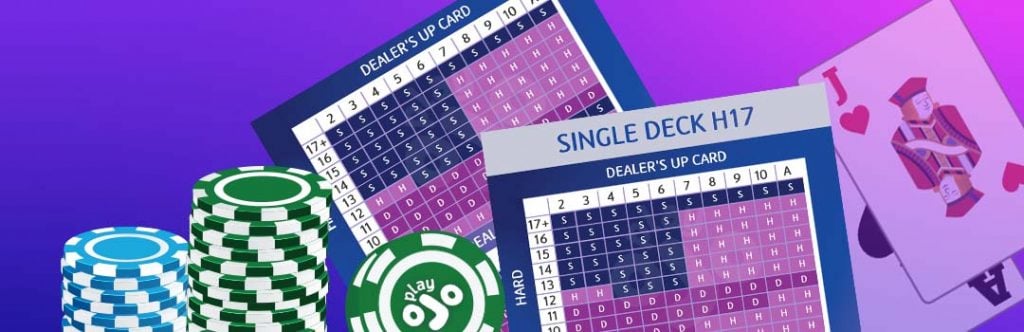
Blackjack is a casino game with a house edge and the outcome of each hand is determined by luck. Don’t expect these blackjack charts to help you make money at blackjack, but they can help you find the best possible decision in any situation.
After the basic rules of the game, a blackjack chart might be the most powerful weapon in your battle against the dealer. In fact, I’d go so far as to say that it’s impossible to play perfect blackjack without one.
If you’re looking for the best blackjack basic strategy chart to use when you play blackjack online, or want to know how to use this gold mine of information, you’ve come to the right place.
What is a blackjack chart?
Basic strategy is a set of decisions which cover every possible situation you will ever encounter at the blackjack table. With over 9 billion combinations of player and dealer cards, how could this collection of perfect plays be presented without scrambling our brains?
“Perfect blackjack can be explained in a simple chart, allowing you to find the right move in seconds”
It might not look much, but in blackjack strategy these charts contains the secret sauce that most casinos would prefer you didn’t know. PlayOJO isn’t most casinos, and we believe the more you know, the more fun it’ll be.
The most popular blackjack strategy charts
There are many combinations of blackjack rules, even at the same online casino. Each one requires its own blackjack rules chart. Although most charts have a lot in common, there are small but important variations between them.
It’s extremely hard to learn every basic strategy chart, so I recommend you pick one that covers the most common table rules you’ll encounter at your local casino or favourite online blackjack table. If you’re a UK blackjack player, you’ll probably be playing 8 deck blackjack where the dealer stands on all 17s (S17), and you can’t double after you split (NDAS).
On this page I’ve provided of the most most common blackjack hand charts. If you haven’t seen them before, here’s a quick explainer for the most common blackjack abbreviations, including an important different in blackjack split rules.
Blackjack chart terminology
Term | Meaning |
H17 | Dealer hits Soft 17 |
S17 | Dealer stands Soft 17 |
DAS | Double after split |
NDAS | No double after split |
H | Hit |
S | Split |
D | Double down |
P | Split |
Some blackjack tables include surrender and alternative actions if the best choice isn’t available at your table (for example “Dh” for Double, stand if not allowed) but UK players will not find a table with the surrender rule very often, and 99% of tables online use standard 4-8 S17 DAS rules covered the by the table on this page.
Single deck blackjack charts
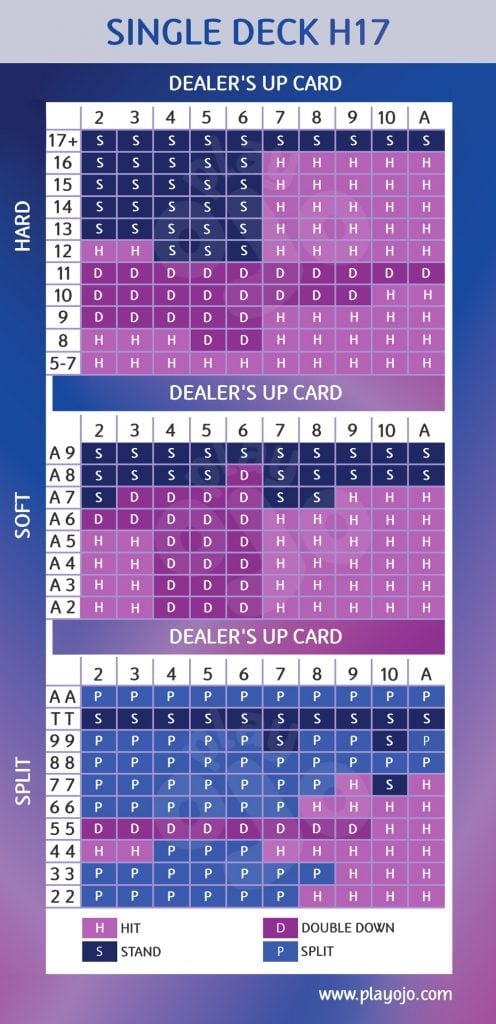
Single deck blackjack may be where it all started – the purest form of the game – but card counters effectively destroyed single-deck blackjack by eliminating the house edge, so you will do well to find a game these days. The main difference between S17 and H17 single deck blackjack strategy charts is the right move with Soft 18 v 2, and Soft 19 v 6.
Double deck blackjack charts
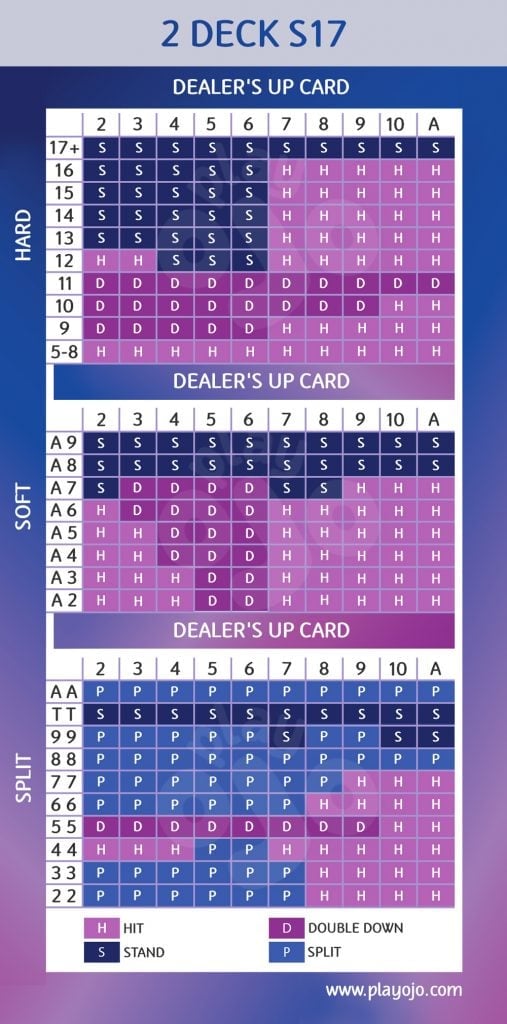
The double-deck blackjack chart is identical for around 270 out of 280 decisions, but deviates from single-deck strategy in a number of situations when doubling or surrendering is possible.
The biggest deviation is with a pair of 7s, which with 2 decks should be hit against a 10, but surrendered or stand in a 1 deck game. You should also hit Soft 18 against an Ace, and double 8 v 5 or 6 if possible.
4 to 8 deck blackjack charts
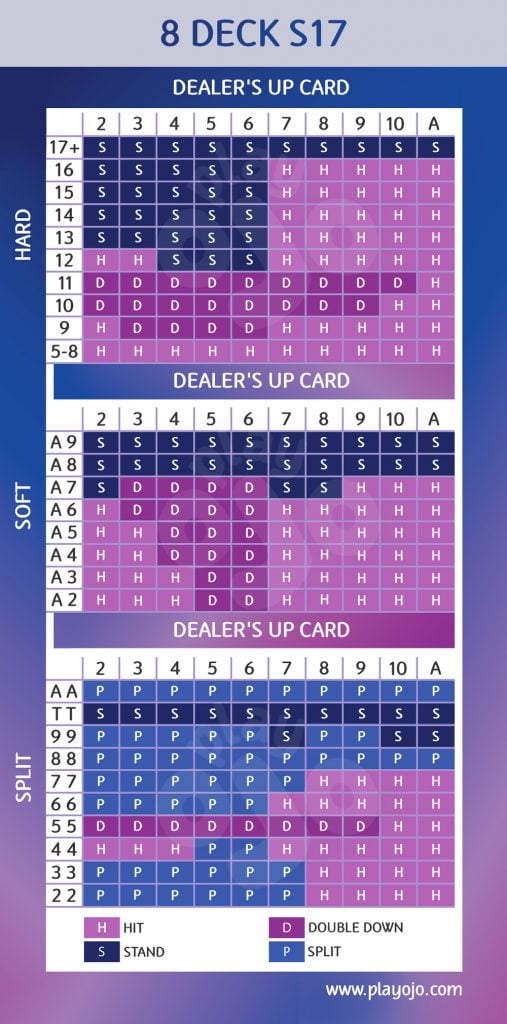
The most popular blackjack hands chart uses 8 decks, so these are the charts to focus on. Although they only deviate from 1 or 2 deck charts in less than 20 instances, some of the differences are important. With 11 against a dealer’s Ace for example, you should hit rather than double.
How to use a blackjack strategy chart
Down one side of the chart, you’ll find most types of player hand. Along the other side, you’ll see every possible dealer up card, from 2 to Ace.
The chart groups player hands into 3 categories; hard, soft and pairs, as the advice changes depending on the type of hand, as well as the points value. Here’s a perfect example of why the advice in basic strategy charts is different for hard hands, soft hands and pairs.
There are 3 ways to make a hand worth 14; A hard hand (for example 9-5), a soft hand (A-3) and a pair (7-7). Although all of these hands add up to 14, the correct move for an 8 deck UK blackjack table is different for all 3!
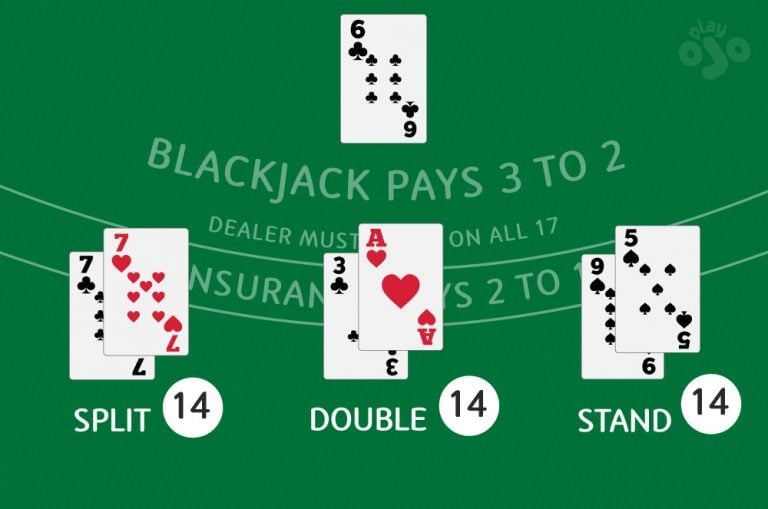
Once you’ve received your first 2 cards and you know the dealer’s up card, you’re ready to check the chart.
To play blackjack perfectly:
Decide if your starting hand is a hard hand, soft hand or pair
Find the row on the left hand side which matches your hand
Find the column with the dealer’s up card at the top
Find the square where the player row and dealer column meet – that’s your move!
That’s how you play your starting hand, and if you stand or double, you’ve reached the end of your turn. If the chart advised you to split or hit, you may still need to make more decisions. Simply keep following the chart’s advice until it recommends that you stand, or you bust.
3 hand examples using blackjack charts
For these examples we’re using the most common UK blackjack strategy chart, an 8 deck game where the dealer stands on Soft 17, NDAS and no surrender.
Hand 1
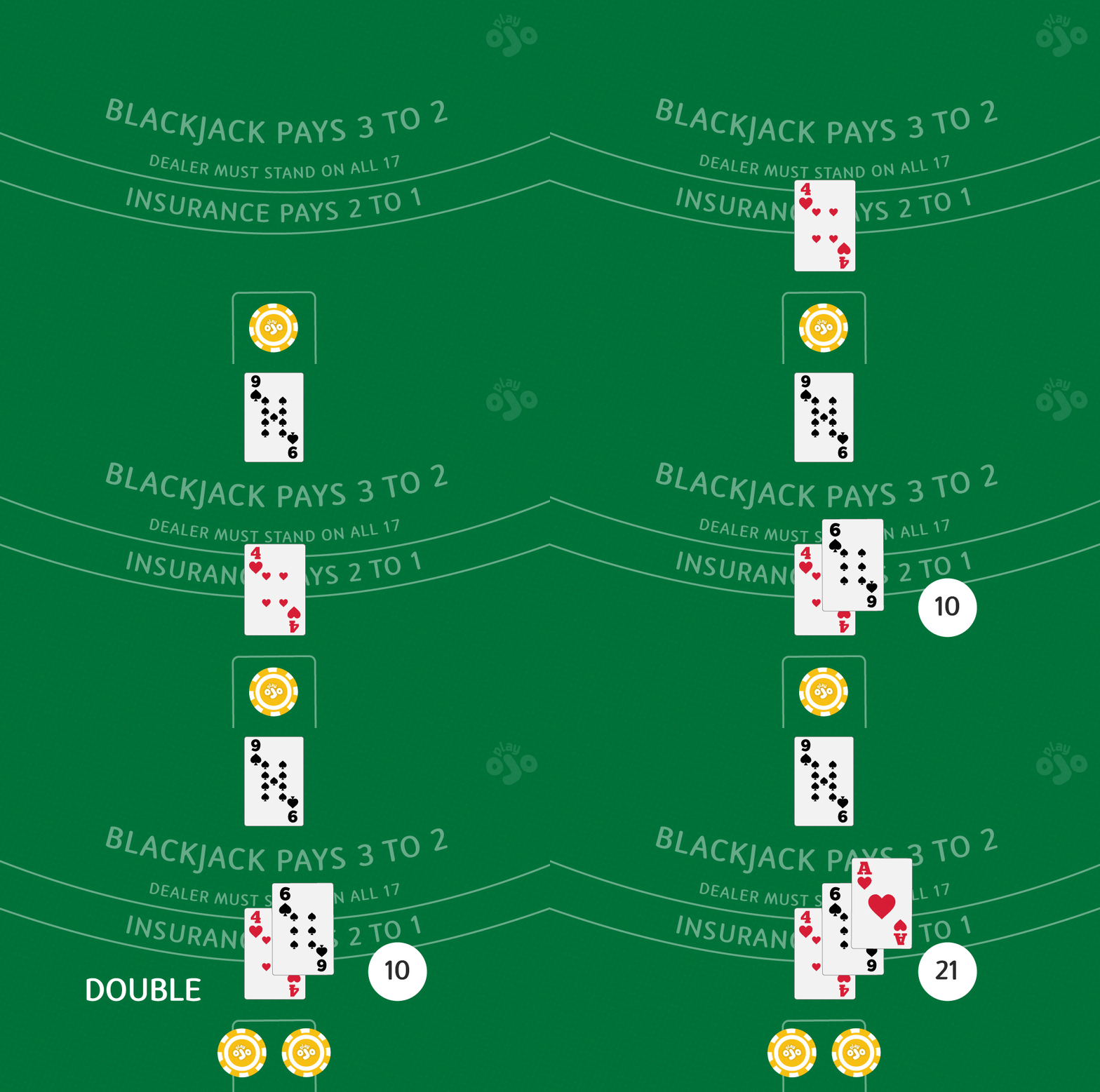
You’ve been dealt 10 against a dealer’s 9. This is a clear double down. You draw an Ace to make 21 – nice work.
Hand 2
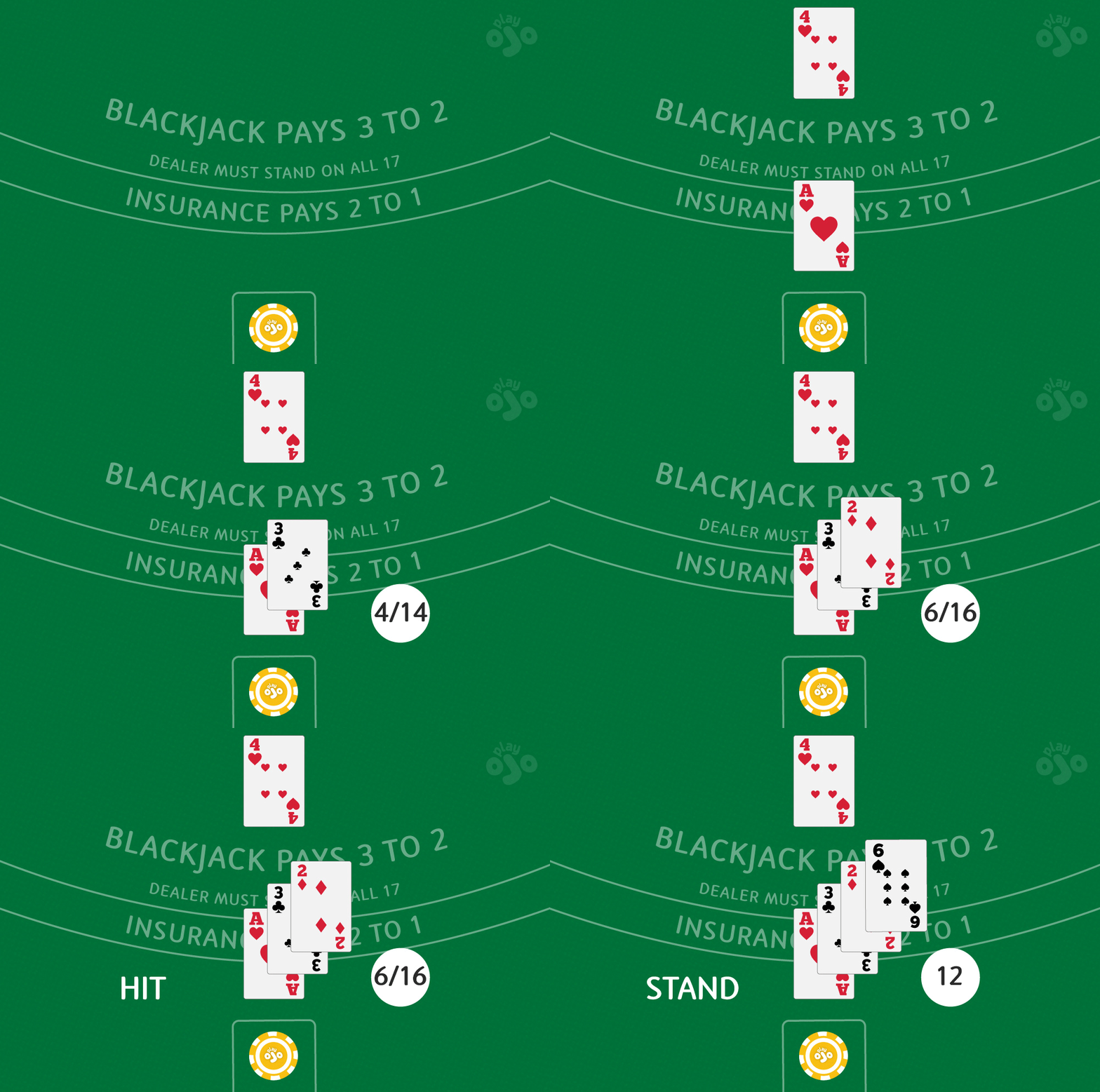
Your starting hand is worth 4 or 14, so you can safely hit without the risk of busting. You draw a 2 which makes 6 or 16. You take another card and make 12, and as the dealer has a weak 4, you stand and hope he busts.
Hand 3
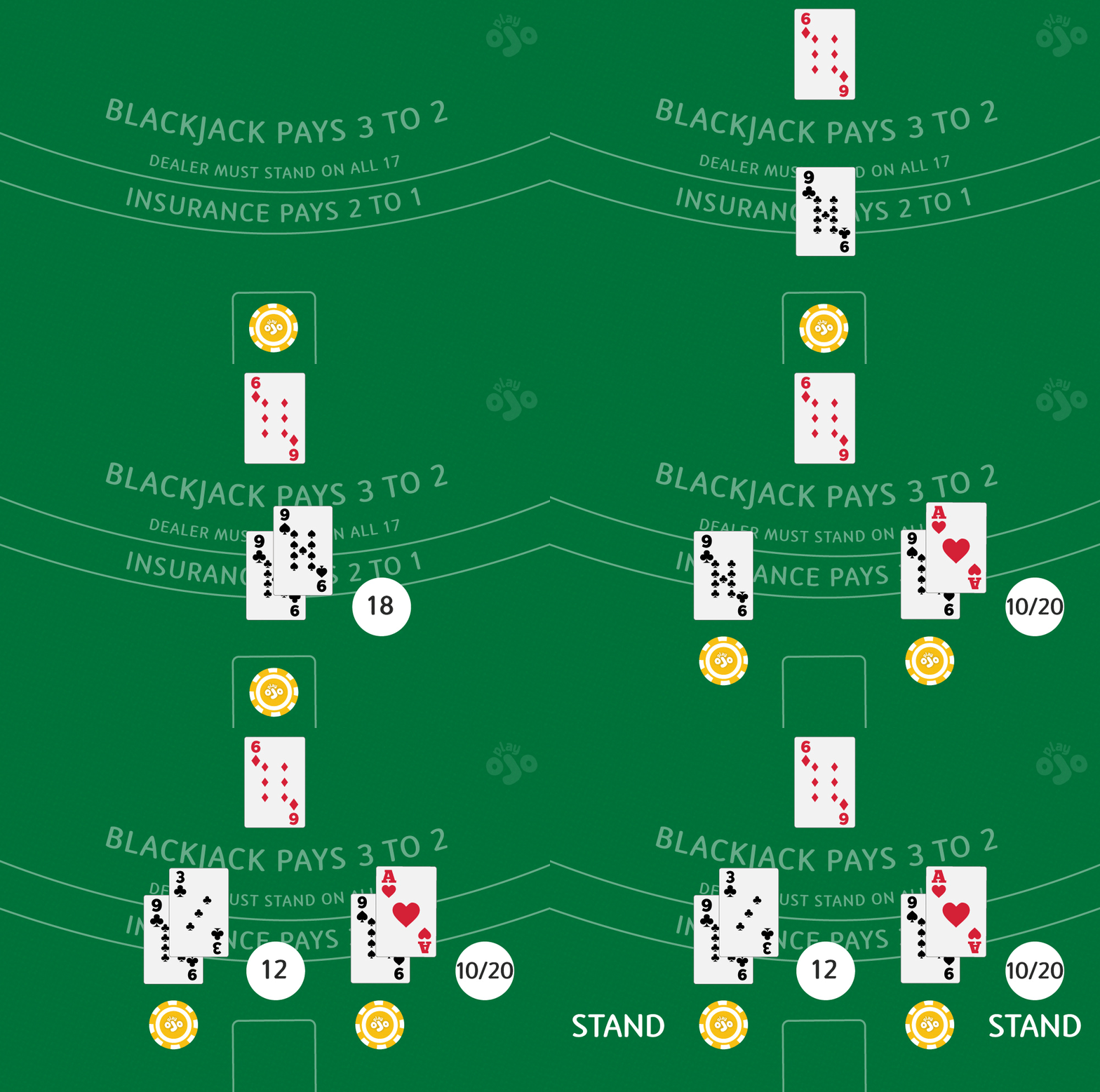
Two nines makes 18, which is a solid favourite against a 6. But the individual nines are much stronger than the dealer’s 6, so the chart advises us to split. You get to double your stake against one of the dealer’s worst cards. You make 12 and 10 or 20, and stand on both.
Summary
The basic strategy laid out in these blackjack hands charts is so fundamental to success that if you remember nothing else from our blackjack guide, the wisdom here will serve you well.
Whether you’re just starting out, taking your game to the next level or learning how to count cards, a strategy chart is your best friend. Now you know what the goal of a blackjack chart is, how to use it and which chart you’ll need when you next play.
Related Posts

Daniel Grant
About the Author
Dan Grant is a 25-year veteran of the gaming industry and a leading authority on iGaming content with over 1,000 articles on topics such as industry trends and bankroll strategy. He began in sports betting in 1997, then spent 11 years at a leading poker brand. As a content lead for iGaming marketing agencies, Dan has worked with over 30 regulated gaming brands, including giants like IGT. He also has a Law degree, providing a unique perspective on the regulatory complexities of the gaming market.
FAQs
How do you read a blackjack strategy chart?
Find your hand down the left edge, find the dealer’s hand along the top edge and find the square where they intersect. The capital letter explains the decision which gives you the best average return.
How do you memorise a blackjack strategy table?
The easiest way to memorize a blackjack table chart is to practice, practice, practice! It won’t take you long to play thousands of hands covering almost every possible scenario, and you’ll learn quickly by experience.
If you want to memorize the blackjack chart without playing, you’re in luck. Few players can instantly commit the entire 280-square chart to their visual memory, but the good news is you don’t need to learn every move.
By studying each row of a blackjack chart, you can spot general rules of thumb that work for large groups of blackjack hands. For example, the chart tells us to double 11 against everything except an Ace, and you’ve just learned how to play perfect blackjack for an entire row. Only 27 more to go!
And if you can’t memorise it, simply print out your blackjack sheet and refer to it while you play
What is the best basic strategy chart?
There is no one chart to rule them all. Each one is designed for a specific set of rules, so the short answer to this question is ‘the right chart for the game you’re playing!’. With the wrong chart, you’ll still play better than someone who doesn’t follow any basic blackjack strategy, but you won’t play perfectly either.
Why are there so many different blackjack charts?
Blackjack is played using many different combinations of rules. In some casinos, double down rules let you double on 8 at one table, but not at the next. The advice in basic strategy charts can vary slightly depending how many decks of cards are used, whether the dealer stands on soft or hard 17, when doubling and splitting are allowed, if you can double after a split, and so on.
You can optimise your play for specific actions with a dedicated blackjack hit or stand chart, or find charts for games with a 6 to 5 payout. (Here’s a clue – don’t play! Stick to a classic blackjack 3 to 2 payout chart if you want to get the best house edge).
Some blackjack chart tables even account for variations in rules by giving you the option of hit or stand if rules like split and double aren’t allowed in certain situations.
Is there a chart for side bets in blackjack?
Blackjack side bets are 100% luck, there is no skill or strategy involved at all, so there’s no chart for them. There is no proven 21+3 blackjack strategy, for example, as the outcome depends entirely on the two cards you receive, and the dealer’s up card.
Can you use a blackjack strategy chart in a casino?
In classic online blackjack casino games that use computer software, there is no time limit, so you have all the time in the world to check your chart. Print out the chart, stick it close to your screen and play as many hands as possible using the chart as your reference tool.
Although you could take a chart with you to a real casino, one thing you can’t do is practice for free. If you want to learn how to use a chart risk-free, find a free internet blackjack game and refer to the online blackjack strategy chart for each decision. It’s the best way to quickly hone your basic strategy, and it won’t cost you a penny.
In a real casino, you’ll only have a few seconds to figure out the correct play. You could keep a blackjack strategy table in front of you, but if you play plenty of blackjack in casinos, the smart play is to memorize the chart so you’re able to recall the right play instantly, even in the heat of battle.
One of the best blackjack tips I was given when I started playing was to place a blackjack strategy sheet in front of me when I played. No casino will object to that, and in fact many US casinos often give blackjack basic strategy charts out for free! Don’t forget that any experienced dealer will know every square of a blackjack table and will usually be happy to explain the right play.
Can I win money using a blackjack strategy chart?
You can’t make a profit consistently using any blackjack chart, because it only gives you the optimal decision, and it doesn’t affect the house edge. These charts are only useful to ensure you play with the lowest house edge possible. Blackjack should be played for fun, not for money, and always played safely.
Do I need a blackjack chart if I am counting cards?
If you are considering learning how to count cards in blackjack, you will definitely need to understand blackjack strategy, memorise a blackjack chart and get to a point where you can choose the best possible move automatically. Only once you can do that is it worth learning how to count cards.
Availability depends on your country





'%3e%3cg%20id='Group'%3e%3cg%20id='Group_2'%3e%3cg%20id='Group_3'%3e%3cpath%20id='Vector'%20d='M24.127%203.03223H35.6789V5.65009H27.1313V9.47147H32.8239V12.0893H27.1313V16.3587H35.9425V18.9766H24.127V3.03223Z'%20fill='%2323208F'/%3e%3cpath%20id='Vector_2'%20d='M35.6797%207.64429H38.7544L41.4425%2015.5418L43.9374%207.64429H46.9154L42.7866%2018.9766H40.0282L35.6797%207.64429Z'%20fill='%2323208F'/%3e%3cpath%20id='Vector_3'%20d='M47.0117%2013.3368C47.0117%209.87564%2049.41%207.43347%2052.8448%207.43347C56.2533%207.43347%2058.6603%209.88442%2058.6603%2013.3368C58.6603%2016.7453%2056.2094%2019.1963%2052.7745%2019.1963C49.366%2019.1963%2047.0117%2016.7893%2047.0117%2013.3368ZM55.6384%2013.4071V13.3105C55.6384%2011.1494%2054.5842%209.84928%2052.8536%209.84928C51.0966%209.84928%2050.0425%2011.1494%2050.0425%2013.3105V13.4071C50.0425%2015.5242%2051.0703%2016.7717%2052.8009%2016.7717C54.5578%2016.7717%2055.6384%2015.5155%2055.6384%2013.4071Z'%20fill='%2323208F'/%3e%3cpath%20id='Vector_4'%20d='M60.584%202.81262H63.5884V18.9766H60.584V2.81262Z'%20fill='%2323208F'/%3e%3cpath%20id='Vector_5'%20d='M65.8633%2014.4349V7.64429H68.8413V14.268C68.8413%2015.779%2069.5617%2016.6662%2070.9057%2016.6662C72.4694%2016.6662%2073.1195%2015.3485%2073.1195%2013.3983V7.64429H76.0975V18.9766H73.1195V17.369C72.5221%2018.5462%2071.4855%2019.1963%2070.0185%2019.1963C67.4533%2019.1963%2065.8633%2017.369%2065.8633%2014.4349Z'%20fill='%2323208F'/%3e%3cpath%20id='Vector_6'%20d='M79.383%2015.9722V10.0425H77.7754V7.64427H79.383V5.50079L82.2908%203.86682V7.63549H84.5221V10.0337H82.2644V15.6736C82.2644%2016.227%2082.528%2016.4642%2083.0814%2016.4905H84.3991V18.9678H82.0975C79.9101%2018.8536%2079.4357%2017.8522%2079.383%2015.9722Z'%20fill='%2323208F'/%3e%3cpath%20id='Vector_7'%20d='M86.4453%203.07617H89.5463V5.98393H86.4453V3.07617ZM86.4892%207.64425H89.4936V18.9766H86.4892V7.64425Z'%20fill='%2323208F'/%3e%3cpath%20id='Vector_8'%20d='M91.418%2013.3368C91.418%209.87564%2093.8162%207.43347%2097.2511%207.43347C100.66%207.43347%20103.067%209.88442%20103.067%2013.3368C103.067%2016.7453%20100.616%2019.1963%2097.1808%2019.1963C93.7723%2019.1963%2091.418%2016.7893%2091.418%2013.3368ZM100.036%2013.4071V13.3105C100.036%2011.1494%2098.9817%209.84928%2097.2511%209.84928C95.4941%209.84928%2094.4399%2011.1494%2094.4399%2013.3105V13.4071C94.4399%2015.5242%2095.4677%2016.7717%2097.1983%2016.7717C98.9553%2016.7717%20100.036%2015.5155%20100.036%2013.4071Z'%20fill='%2323208F'/%3e%3cpath%20id='Vector_9'%20d='M104.964%207.64429H107.942V9.48909C108.539%208.17138%20109.646%207.39832%20111.254%207.39832C113.731%207.39832%20115.189%209.05864%20115.189%2012.1772V18.9766H112.211V12.3529C112.211%2010.7717%20111.614%209.95468%20110.217%209.95468C108.803%209.95468%20107.933%2011.1055%20107.933%2013.2226V18.9854H104.955L104.964%207.64429Z'%20fill='%2323208F'/%3e%3c/g%3e%3c/g%3e%3cg%20id='Group_4'%3e%3cg%20id='Group_5'%3e%3cg%20id='Group_6'%3e%3cpath%20id='Vector_10'%20d='M17.1173%204.49933C14.4028%200.923925%209.47456%20-0.0863242%205.38086%202.10108C6.97969%205.69406%208.17442%209.91953%2016.0544%2010.1655C16.9768%2010.1919%2017.9958%2010.1655%2019.1115%2010.0777C18.9533%207.81997%2018.2154%205.94881%2017.1173%204.49933Z'%20fill='%2323208F'/%3e%3cpath%20id='Vector_11'%20d='M15.6678%2011.8522C10.9241%2012.0894%208.7015%2013.8112%207.31351%2015.9459C6.49653%2017.2021%205.96944%2018.5901%205.38086%2019.8991C11.1261%2022.9649%2018.5492%2019.7321%2019.1115%2011.9137C17.8377%2011.8171%2016.6869%2011.7995%2015.6678%2011.8522Z'%20fill='%2323208F'/%3e%3c/g%3e%3c/g%3e%3c/g%3e%3c/g%3e%3c/g%3e%3cdefs%3e%3cclipPath%20id='clip0_10172_12682'%3e%3crect%20width='120'%20height='21.9619'%20fill='white'%20transform='translate(0.285156%200.019043)'/%3e%3c/clipPath%3e%3c/defs%3e%3c/svg%3e)




'%3e%3cpath%20id='Vector'%20d='M35.8604%200H35.168V24H35.8604V19.3822H44.6063V16.5862H37.877V13.3664H43.6296V10.5494H37.877V7.43484H44.6063V4.61782H35.8604V0Z'%20fill='%2323208F'/%3e%3cpath%20id='Vector_2'%20d='M8.63805%2013.6718L6.15275%209.64895L2.96715%204.66782L2.93555%204.6178H0.294922V19.3822H3.22515V10.3071L5.41032%2013.8429L8.92502%2019.3822H11.5867V4.6178H8.63805V13.6718Z'%20fill='%2323208F'/%3e%3cpath%20id='Vector_3'%20d='M13.2344%2019.3822H22.9123V16.5862H16.183V13.3664H21.9356V10.5493H16.183V7.43482H22.9123V4.6178H13.2344V19.3822Z'%20fill='%2323208F'/%3e%3cpath%20id='Vector_4'%20d='M24.0996%207.45588H27.4827V19.3822H30.4313V7.45588H33.7933V4.6178H24.0996V7.45588Z'%20fill='%2323208F'/%3e%3cpath%20id='Vector_5'%20d='M54.4252%2013.6954L51.9399%209.67527L48.7543%204.69413L48.7227%204.64148H46.082V19.4058H49.0096V10.3308L51.1948%2013.8666L54.7121%2019.4058H57.3738V4.64148H54.4252V13.6954Z'%20fill='%2323208F'/%3e%3cpath%20id='Vector_6'%20d='M58.5781%204.64148V7.47957H61.9612V19.4058H64.9098V7.47957H68.2719V4.64148H58.5781Z'%20fill='%2323208F'/%3e%3c/g%3e%3cdefs%3e%3cclipPath%20id='clip0_10172_12744'%3e%3crect%20width='67.9798'%20height='24'%20fill='white'%20transform='translate(0.294922)'/%3e%3c/clipPath%3e%3c/defs%3e%3c/svg%3e)









We use both automated and manual processes in order to verify the age of the customer registering the account and any player under the age of 18 who registers an account will have their account closed immediately.
We say NO to Underage Gambling . We do not allow players under the age of 18 to gamble. This is stated in our Terms and Conditions.


'/%3e%3c/g%3e%3cdefs%3e%3clinearGradient%20id='paint0_linear_10172_24211'%20x1='7'%20y1='2'%20x2='23.4625'%20y2='10.6428'%20gradientUnits='userSpaceOnUse'%3e%3cstop%20stop-color='%234921C5'/%3e%3cstop%20offset='1'%20stop-color='%23A608FF'/%3e%3c/linearGradient%3e%3c/defs%3e%3c/svg%3e)
'/%3e%3c/g%3e%3cdefs%3e%3clinearGradient%20id='paint0_linear_10172_24214'%20x1='1.21484'%20y1='2.25'%20x2='20.6158'%20y2='23.7133'%20gradientUnits='userSpaceOnUse'%3e%3cstop%20stop-color='%234921C5'/%3e%3cstop%20offset='1'%20stop-color='%23A608FF'/%3e%3c/linearGradient%3e%3c/defs%3e%3c/svg%3e)
'/%3e%3c/g%3e%3cdefs%3e%3clinearGradient%20id='paint0_linear_10172_24217'%20x1='2.00195'%20y1='2'%20x2='22.002'%20y2='22'%20gradientUnits='userSpaceOnUse'%3e%3cstop%20stop-color='%234921C5'/%3e%3cstop%20offset='1'%20stop-color='%23A608FF'/%3e%3c/linearGradient%3e%3c/defs%3e%3c/svg%3e)
'/%3e%3c/g%3e%3cdefs%3e%3clinearGradient%20id='paint0_linear_10172_24220'%20x1='2'%20y1='4'%20x2='17.6088'%20y2='23.5113'%20gradientUnits='userSpaceOnUse'%3e%3cstop%20stop-color='%234921C5'/%3e%3cstop%20offset='1'%20stop-color='%23A608FF'/%3e%3c/linearGradient%3e%3c/defs%3e%3c/svg%3e)
Trademark ™ 2026 PlayOJO. All rights reserved.
Apple and the Apple logo are trademarks of Apple Inc., registered in the U.S. and other countries. App Store is a service mark of Apple Inc., registered in the U.S. and other countries.